
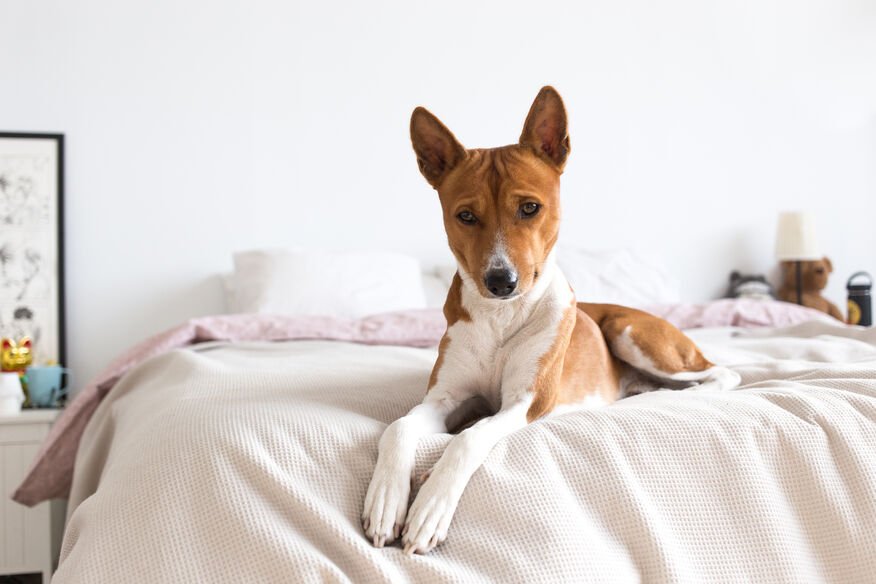
My neighbor’s Basenji got loose last spring and chased a squirrel for three blocks before anyone could catch him. He didn’t bark or growl. There was just silence and a flash of red fur. That’s when I understood why people call the Basenji a “barkless dog.”
A Basenji dog is not like most dogs you may have grown up with. It won’t bark when the mailman comes or howl when it hears sirens. But don’t think that being quiet means it is calm. Behind that quiet nature is a very smart and independent dog.
A hunting dog from central Africa, not a lapdog by design
Basenji has been here in this world for thousands of years. It comes from the Congo Basin where hunters used these dogs to find and chase animals through thick bushes. Being fast and quiet was more important than making noise so over time, this dog developed a different-shaped voice box that makes barking very difficult.
What you get instead is a yodel. Sometimes a howl. Sometimes this weird chortling sound people compare to a Woodstock crowd. It’s genuinely one of the most distinctive things about owning one.
The African Basenji eventually make a way to Britain in the 1930s and from there into homes across the world. But that long stretch as a working hunting dog, not a companion animal, still shapes the breed today. These dogs were not trained to always depend on people. They were bred to think and make quick decisions on their own while working.
That history matters more than most breed guides admit. It’s the root of almost every quirk people either love or struggle with.
What a Basenji looks like, and how long you’ll have one
Basenjis are small but active dogs. Their body is well built and made for movement.
- Height: about 16 to 17 inches at shoulder
- Weight: from 22 to 24 pounds likely
- Coat: short and doesn’t shed much. It can be red or black or tricolor or brindle with white markings.
People notice their curly tail and wrinkled forehead first. That forehead makes them look curious all the time. It’s pretty cute i guess. Sometimes they tilt their head. Look at you like they are trying to figure out what type of thinking you are thinking. It’s of cute really. You can almost see them processing.
Basenjis usually live for around 12 to 14 years.That’s a stretch for dog of this size. Some live a bit longer others a bit. It depends on how healthy they stay and how well they’re cared for. No breed guide can promise you a number. Every dog is different.
Basenji temperament: sharp, independent, a little bit cat
If you’ve owned dogs that live to please you, a Basenji will throw you off at first.
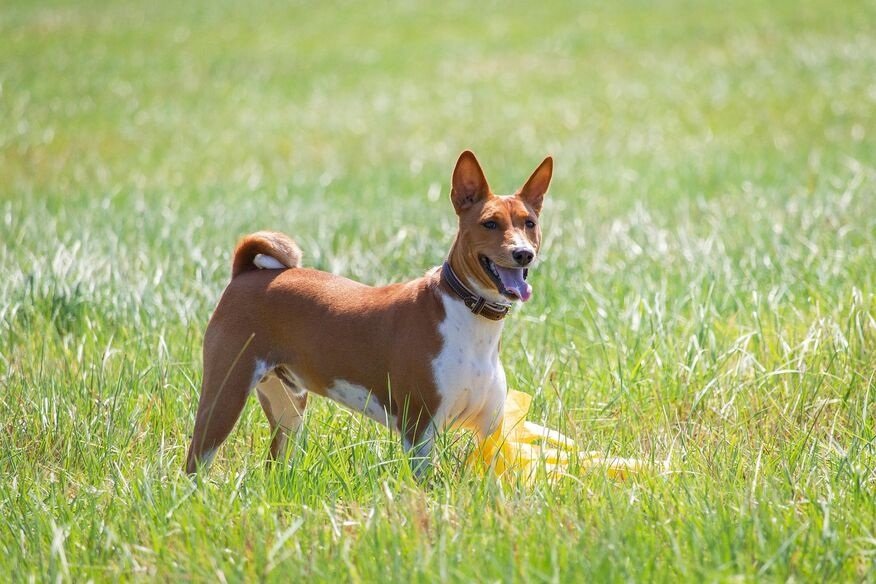
Basenji’s personality leans heavily toward independence. They’re intelligent, no question, but that intelligence often gets used to figure out how to avoid doing what you asked rather than doing it faster. People compare them to cats constantly and honestly the comparison earns its keep. They self-groom. They pick their own spot to sleep. They don’t always come when called just because you called.
That said, this isn’t a cold or aloof breed once trust is built. With their own people, Basenjis get playful and mischievous or even a little clingy in short bursts. It’s just affection delivered on their schedule, not yours.
A few traits define the breed’s behavior:
- Intelligence that works against obedience as often as it helps it
- A strong prey drive, ready to trigger at the sight of anything small and fast
- Genuine independence, content entertaining itself for stretches
- Constant alertness, always scanning for something interesting
In practice, this usually plays out as a dog that’s endlessly entertaining but not always convenient. You’ll laugh more than you expect. Then you’ll also get ignore more than you like.
Is a Basenji a good family dog?
This should depend more on your family than on the breed itself.
Basenjis can be good with children or particularly older kids who understand not to grab or chase. They’re playful and gentle with people who they trust but they don’t have much patience for rough handling from toddler. A dog that gets overwhelmed easily and can’t communicate frustration through barking will usually just walk away or in a worst condition snap.
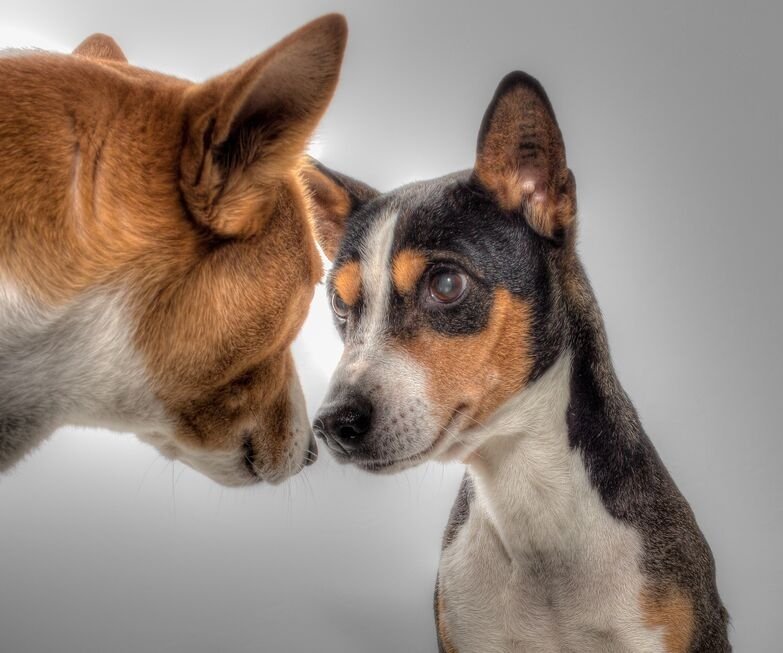
As for Basenji, good with other dogs, that’s often fine, especially if they’re raised together. Small pets are the real risk. Cats, rabbits, anything that runs can trigger that prey drive instantly, and it has nothing to do with aggression. It’s pure instinct kicking in.
Basenji apartment living actually works better than people expect. Since barking isn’t a factor, noise complaints are rare. But don’t confuse a small apartment with low needs. This breed still needs daily exercise regardless of square footage.
Training, exercise, and the patience it takes
Basenji training is not for the people who want results instantly.
They pick up commands fast and sometimes within a couple of repetitions but consistency is the real challenge. When they have learned something, they’ll decide for themselves whether it’s worth doing again. Harsh corrections tend to backfire badly with this breed. Positive reinforcement or short sessions and high-value treats work far better.
- A few things that actually help:
- Keep sessions under 10 minutes since attention spans are short
- Start socialization early, before that independent streak fully sets in
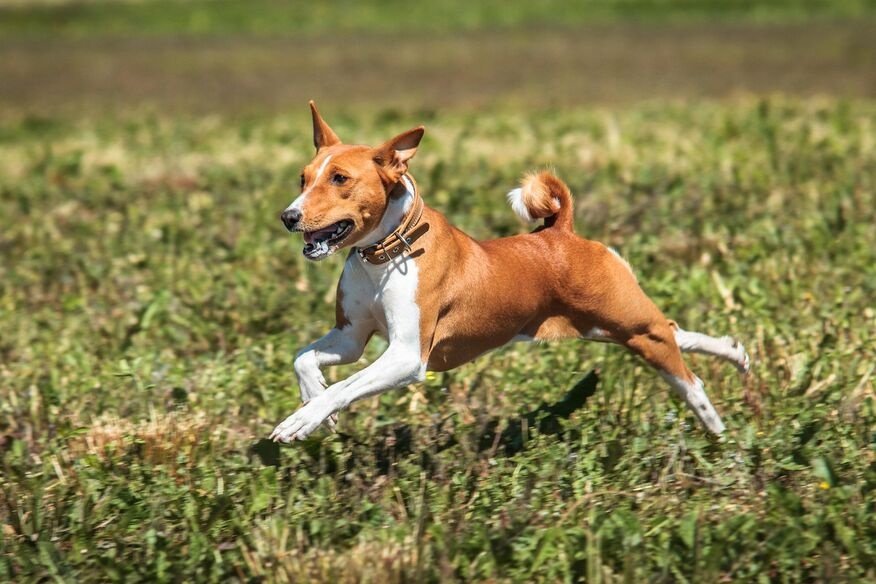
- Never trust an off-leash Basenji near open space or traffic, that prey drive combined with real speed is a dangerous mix
Use food and play as motivation rather than praise alone.
Basenjis have moderate to high energy level. They are not always running around house but they still need 30 to 45 minutes of exercise every day. If they don’t get enough activity they may chew furniture or dig up the yard. A tired Basenji is usually much easier dog to handle and that really is true.
Grooming, diet, and the health issues worth knowing
Here’s the good news. Basenji grooming is about low maintenance as it gets in dog world.
That short coat sheds far less than most breeds and they clean themselves the way cats do which is part of why people call them one of the cleaner dog breeds around. A weekly brush handles loose hair. Baths are not needed often since they rarely develop that classic wet-dog smell.
Diet-wise this is a lean and athletic breed so portion control actually matters. It’s easy to overfeed a dog that isn’t visibly begging and extra weight puts real strain on their joints over time.
Health is where every prospective owner should slow down and pay attention. Basenji health problems worth knowing about include:
- Fanconi syndrome is kidney disease more common in this dog than other breeds
- Progressive retinal atrophy slowly affect vision in this dog
- Hypothyroidism has a impact on the breed’s energy and it’s metabolism
- Hip dysplasia, though less common here than in larger breeds
Above diseases doesn’t mean that every breed must have these. But if you’re buying a Basenji puppy, ask directly to the breeder that if the screening has done on both parent. It dosen’t eliminate the risk but eventually it may lower it.
Basenji pros and cons, laid out honestly
What works in this breed’s favor:
- Minimal shedding and low odor
- No barking, which genuinely cuts down on household noise
- Sharp intelligence that makes them endlessly interesting
- Naturally clean, low-grooming-effort dogs
- Compact size that suits smaller living spaces
What tends to frustrate owners:
- Independence that makes obedience inconsistent at best
- High prey drive, risky around small pets
- Real exercise needs despite the smaller frame
- A training curve that tests even experienced owners
- Affection on their terms, not always when you want it
FAQs
How much does a Basenji dog cost?
Besenji may cost between $1,500 and $3,000. Price can vary depends on the dog’s lineage and where it comes from.
Is a Basenji a good house dog?
Basenjis do very well if we give them enough exercise. They’re clean and quiet and surprisingly cat like in how they groom themselves.
Do Basenji dogs bark?
Basenjis rarely bark. Instead, they make yodel like sound called “Baroo” because of their unusually shaped larynx.
What is the downside of Basenji?
They’re independent and very stubborn and hard to recall off leash. So, training takes patience and consistency from day one.
Are Basenji dogs cuddly?
Basenjis love being around their parents. They like them in their own ways but they don’t snuggle much.
Conclusion
A Basenji won’t fit the mold of the eager, obedient companion most people picture when they think “family dog.” It’s smarter than that stereotype, more independent, and it takes real effort to earn its trust. But for someone who wants a dog with genuine personality and doesn’t need constant validation in return, this breed delivers something most others can’t.
If you’ve got the patience, the yard space, and a sense of humor about getting ignored occasionally, a Basenji might just be one of the most rewarding dogs you ever own.